This seems like a very ambitious project, which is great. It does seem at risk of boiling the ocean. They're taking on:
* NAS device with encrypted file storage and UPNP
* setting up a VPN
* client software for said VPN on each platform (or at least installers that can configure each platform's native VPN support)
* multi-device file sync
* whole-device file sync, with client software for each platform, presumably with subtle kernel-level code (those "patent-pending technologies")
* versioned backup
* "instant file transfer" (presumably this is just their streaming tech repackaged, but it's a separate UX to develop and maintain)
* streaming file delivery across varying-bandwidth connections
* presumably media player apps on each mobile client platform to consume said streaming media
Each of those things is plausible, putting them together makes a lot of sense at the product level, and it would be a godsend if they can do it well. I guess I just wonder why they're not raising $5M rather than $100k.
(Maybe the team is actually an established company with 20 engineers, and the Kickstarter is purely to bankroll the initial production run? It's not clear from the team bio.)
UPNP can be handled by existing Linux UPNP software.
There is a FOSS VPN that can do point to point VPN routing, but I'm forgetting the name.
FUSE works ona a surprisingly large number of operating systems now (Linux, OSX, Android-fied Linux, Windows), so building a FUSE file system can be done.
And as for data sync and replication? CEPH can probably handle this.
The software exists to do this, no one has put it together in an easy to use package. This is why I funded their effort, I want this to come to pass.
Indeed, I wasn't suggesting that any one of those things was technically infeasible, but that "putting it together" is a very large undertaking, because there are a lot of things they're trying to put together.
And they're talking about some form of replication on multiple drives plugged in to a hub, and they're also talking about replication if you have two Plugs in different locations.
Using tonido, one can replicate 2 plugs in different locations.
Don't take us wrong. We wish them good luck. Just pointing out it is not a technology problem. The problem is to handle complexity when you try to do a lot of things.
Also: Your website is hard to navigate. I wanted to see how much it costs, and I couldn't find a direct link. I clicked a buy link and then subsequently found a "go green" link which finally allowed me to see the product.
Are these still on the old Marvell Armada SoC? I'm still running a Dreamplug as a gateway/mini server and it's hamstrung by everything running over USB.
I also found it difficult. On the product description page, there's a green icon in the upper-right that says "Get Tonido Plug". That icon is a link to the purchase page.
Yes. Store hundreds of movies and hundreds of thousands of pictures on plug and access them anywhere![1]
[1]: So long as you have an absurdly fast internet connection at your house, and also have an absurdly fast internet connection wherever you are that you're trying to use this thing...and aren't on an airplane, or in the car, or on a train...which is when you would generally want to watch movies on your tablet.
This is going to become less and less of a problem as time goes on.
There was a time when the idea of streaming high quality video and doing so using Flash, at that, seemed ridiculous, but it's ridiculously commonplace, now.
I often stream things from a VPS instance to my home via sshfs right now. Doing so over even 3G would work in many cases.
Shoot, I do this with Plex:web off my Mac Mini all the time. Works great. Now has HTML5 video AFAIK, and scales the quality to the available bandwidth. I watch on my Android phone over 3G all the time.
In reality my "cloud storage" is just my Mac Mini with a set of drives attached, and mounted via SSHfs when I really need it. Works fine, but a nicer software package that's more akin to a self-hosted Dropbox would be pretty nice. I don't need a dongle, though it's a nice idea if you don't have a home server.
On the other hand, store things on a 3rd party cloud storage provider that will happily hand everything over to the NSA whenever they ask... If it's in your home they don't have an easy interface to it, they have to physically infiltrate your residence, which costs a lot more and, presumably, will require more than a passing interest in you to happen.
Sure but then your hard drive fails (as they tend to do) and you lose all the data. Sounds like the right solution is just encryption on the client + 3rd party cloud storage.
Except its easy to build RAID enclosures that are USB mass storage devices. Plus, it replicates data across multiple Plugs in different location, and I think the Plug software also shares data on your computer (which can be RAIDed) through your private Plug network as well.
RAID is not a backup solution. If your filesystem is corrupted in software (or you just mistype and delete something important), it will happily replicate the damage across all of your drives.
Personally I feel recommending RAID to home users is generally a bad idea. It gives a false sense of security.
Depends on the file system implementation. Smarter RAID implementations, such those integrated into ZFS, will not be easily taken down.
In addition, RAID does not require you to use local devices. I agree, however, it is not a backup solution, and I did not claim it was. I merely stated RAID is how you deal with drives dying and taking everything with it. Backups is how you deal with RAIDs or entire locations dying, ergo, offsite backup.
And multiple Plug installations seems to cover the concurrent offsite sync part of that.
I setup unRaid for my wife's photography business. Haven't had to deal with an HD failure yet though so I can't vouch for it. Might be worth looking into yourself though for a cheap backup solution.
> on a 3rd party cloud storage provider that will happily hand everything over to the NSA whenever they ask
That's assuming they just don't have complete access to everything anyway, as Guardian seemed to indicate today is the case with SkyDrive. Even if NSA or the FBI[1] is not interested in you specifically, they still might mine your data.
1. These leaks and especially today's Microsoft leak indicate substantial cooperation and intelligence sharing between NSA and the FBI.
I'm not understanding how these two things are different for the purposes of this discussion:
- The government asks for data on an ad hoc basis, and 3rd party providers trip over themselves in an effort to comply.
- The government gets a firehose of data for all customers of 3rd party providers.
It doesn't matter of the NSA is data-mining your SkyDrive, or the the local sheriff's office gets your SkyDrive data by just asking (i.e. without a warrant). Either way, your data is less secure when it's stored with a 3rd party provider than it is if you keep it in your own home.
When it's in your own home, law enforcement needs a warrant, and spy agencies need to physically send someone to bug your home. Either way, the bar has been raised to getting access to your data, so at the very least they will only access your data if there is a real reason to, and there will be some amount of oversight[1].
[1] Maybe not external on the spy agency side, but presumably orders to send people in to bug a home get more scrutiny, if for no other reason than the fact that it costs more.
If Plug ended up being widespread enough all they have to do is focus efforts on penetrating Plug devices. Security in the hands of end-users, while great for the tech savvy person with lots of free time, is a disaster for "normal" people.
"When Plug is installed on your computer, our application intercepts all the input/output operations performed on your files, using several patent pending technologies. When Mac OS X, Windows or Linux want to store or access data, they ask our application instead of manipulating the hard drive."
FUSE wouldn't do what they claim to do. FUSE would let them create a Dropbox-alike, i.e. a separate partition whose contents are synced to the Plug. Using FUSE to intercept all I/O on all files would require you to migrate your entire directory structure to their FUSE filesystem; probably a rather unfriendly setup procedure.
If their description is to be believed, they're presumably installing a kernel module which hooks in above or below the filesystem layer, so it doesn't require you to modify your existing filesystems.
That would be the "Translucent File System" from Sun, patent #5,313,646 (http://www.google.com/patents/US5313646). Back when Sun was building a new source code control system (code named Avocet) they wanted a way to create a 'view' of the branch which included stuff from NFS servers and stuff locally. The problem is subtly tricky in some ways (creating 'whiteout' to delete a file which exists in one layer but not the other).
Its a really handy thing, and I was very impressed with it in the mid '90s when I was using it. Perhaps its time has come again?
A similar technique is also used in IBM's Rational ClearCase suite. It uses a proprietary networked filesystem to provide a dynamic view to users. It was an interesting attempt at a solution for version control and I'm sure that its in use today.
I have a fuzzy memory of the folks at Rational licensing the entire source code product from Sun at one point. I know some of the key engineers on it went to work for Rational (this was all pre-IBM acquisition)
The product is aimed at techies? I got a very different impression, from phrases like “we have a passion for simplifying the life of non-geek people,” as well as the general tone of the pitch.
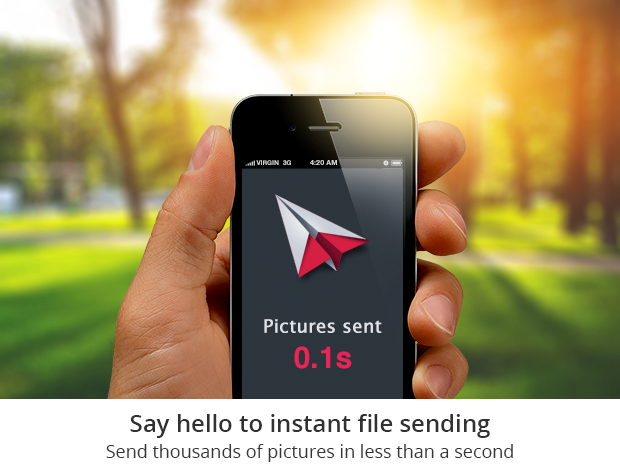
"Ever needed to send hundreds of pictures to a friend? With Plug, we invented a technology to transfer files instantly. No matter their size, no matter their number. That’s also part of our job to simplify storage."
How exactly are they planning to make that a reality?
Say I've been out filming with my GoPro and my friend wants the clips, or I've taken some photographs with a DSLR (which are at least >5MB in size per picture).
I suspect that by "transferring" the files they mean "transferring a token allowing the recipient to access the files from your plug". From there, under their (debatable) underlying assumption that accessing files from a plug from your device is fast, it's as if the data has been transferred: recipient can view the files on their device, except they're being fetched from your plug (and maybe copied to their own plug in the background).
That was what I was thinking too, but it all depends on everyone having high-speed internet.
Which will happen in the future, but at the moment there are lots of people with <5Mbit connections, and preferably to be able to access your files like they claim you with images and other medias you will need something like a 100Mbit or better connection anywhere you go.
This is very exciting because I feel this addresses one of the cornerstone technology failures that keeps me from enjoying the computing model I want, which I call PAO [1]. Namely, it deals with the failure of VPNs to evolve into something that regular consumers can understand. Plug in this device, add a hard drive, and access your data on your various computing devices from anywhere on the Internet. VPNs have had the underlying capability to provide that access to personal data, and those savvy enough to implement a personal VPN server do so. I don't use cloud file servers because I can access my home network's file server over an IPSec VPN from all of my devices. But what a pain in the ass.
Most people defer the responsibility to manage their data to cloud vendors because cloud vendors solve the key pain point (I need my data everywhere) at the seemingly low cost of just losing control and some added friction. But the alternatives where control is retained have classically been user interface disasters. I imagine my mom setting up an IPSec/L2TP VPN--yeah, not happening.
Even as someone who does have the ability to set up a VPN, I am left with routine annoyances associated with the abysmal user interfaces associated with managing VPN connections.
Of course, in addition to this, to realize PAO, I still need an OS-level application server concept with all my applications designed in a "responsive" model servicing multiple concurrent views. But providing always-on plug-and-play VPN connectivity and from-everywhere access to personal data is a leap forward.
Thanks for your work on this, guys!
Such a device has the potential to render all traditional cloud storage vendors obsolete, and I welcome that potential future.
Pogoplug is not a free service. I bought one thinking it was. They actually cap the amount of data you can store. I believe it is 5GB for free.
Mine's running Arch Linux Arm now, with Open VPN, NFS, Samba and simple DLNA. Much more useful! I just wish I could re-encode the stream to my iPad. Often the video on my iPad refuses to playback proper.
Can we have a discussion about marketing? Like how does this $60 niche product raise $150k in 2 days? Was it hyped before hand? Did kickstarter hype it? Anyone know the details behind their PR?
They are one of the most brilliant tech teams in France, and got at least a good headstart there. Then they did Techcrunch, etc. The high quality Kickstarter page & video certainly helped a lot too.
Oh wow, I feel so sorry for anybody who has backed this. The promises they make are simply technically impossible on devices such as iPads and iPhones. They also don't say they have actually done anything in that area either, only that they have a prototype for Win/Linux/Mac desktop - probably an unpolished clone of Dropbox.
the way I see it, it's "impossible" because (for example) if you use plug to keep your music in sync, it won't be viewable in iOS's music app, only through whatever app plug puts together.
I don't believe this project can accomplish all of what it claims it will.
Media streaming alone is an art and a science all in itself. There are various formats, encoders, decoders, etc... This is why AirServer/AirVideo is its own thing already... and I'm sure they're very busy.
This is just a Linux server running something like Samba [1] to share files across your local network or the internet.
Quite basic stuff. I've had this setup at home for ages, using some old cheap laptops/computers.
You can actually replicate this on Windows or Mac natively. Just share a folder.
Am I missing the exciting part?
--
Edit: for crying out loud, my media-center has a sharing functionality. Which means my media-center does exactly what this Plug thing supposed to do, without all the non-sense proprietary marketing shenanigans.
Wake up people. This tech has been around for ages!
You're missing a lot more than the exciting part. You need to wake up yourself, go back and read it again then come back and tell us how to to all that with samba (of all things).
Is it RAID configurable? Is the data encrypted at rest, and, if so, how? Will it support two factor authentication? Will Plug ever "phone home" for any reason or report any data (meta or otherwise) to anybody except the purchaser? Will the software be open source, and if not how do we trust this device from a security standpoint? Can Plug be used effectively as a NAS without the syncing software?
I know it's difficult to tell, but I'm very excited about this.
I'd love to hear more about how this works on iOS. How does the Plug app have access to files in the local filesystem outside of the Plug app's sandbox?
What I imagine for the mobile clients is that it would be a window to the files in your Plug. You can stream whatever you like from your Plug with internet access, and download whatever you have room to store for offline use.
I think this project has great ambition and tone. I like it, it seems good.
But — trust users to manage their own physical data? Forget it. It seems to me that people don't just want their data accessible from everywhere, but they want it to be kept in perpetuity. Considering the backup schemes I see among even tech savvy friends: really, forget it. Those fussy WD Passports can't compare to the reliability of Glacier. The cost of cloud storage is worth it.
There are a few workarounds I can imagine though, and I like where this is headed overall, so: nice work!
I was piecing something like this together on my own with a laptop and a pile of external hard drives, when I found my desk overrun by the little things. They were too fragile and didn't stack well. I started looking around for a shelf to hold external hard drives and do cable routing, when it hit me "oh yeah, that's called a desktop computer." So I bought a nice computer case and a relatively inexpensive motherboard/CPU combo and filled it with disks. Way sturdier, and much faster. I'm not sure at all what I was thinking before with that USB idea.
Using external hard drives as a semi-permanent storage array is not a good solution. For an appliance, Drobo/Synology has the right idea here, and I think this group is making a mistake by expecting people to build a disk array out of a hub and USB drives.
I went through a similar phase trying to use an OpenWRT router plus external hard drives for file sharing. The main problems are performance and reliability. I can only get 20 MB/s read and 10 MB/s write using a decent router with a decent processor (MIPS 74Kc). Plus, USB connection is much less reliable and sometimes the drives would get disconnected.
From the kickstarter page, Plug can only do 30 Mb/s, which is ~4 MB/s and likely not enough to stream Bluray ISO. A fast enough processor is essential for NAS.
I actually really like the idea, but the problems I would have are:
My current internet has awful upload speeds, but I've had fibre in the past and many other people do/will.
So ruling that out, my other issue is surely my main PC has to be on? 99% of my media (the only real use to me) is on it.
Wake on LAN was a given I thought. I didn't read anything and quick CTRL-F finds nothing. It was quite hard to read through the spiel but if it's 2 years in development; is WOL such a given they don't mention it or is there a reason they're not doing it?
Hmm. Plug will apparently retail for $150. If I look at the dual band 802.11n router I have which happens to have a USB host port for NAS (which seems to be common these days?), it's $87 on Amazon, and of course if you don't want the router part you can get something for much less, or just use an existing desktop if you don't mind the power bill.
Of course much of the value is in the convenience of setup and the full-featured set of client software that they've developed. But $150 seems like a huge markup.
If it really is as robust and simple to operate as they claim it will be, $150 seems more than fair. Especially considering the thriving $500 tablet market is driven by every day people who think it's too much of a hassle to use their phone or laptop on their sofa. I'm not sold on the product yet (security reasons) but price is certainly not my complaint.
I don't understand why you have to buy hardware at all. Surely everything Plug does can be done with some software that sits on any of your existing desktop machines.
Obviously keeping a desktop computer turned on all day just to run your Plug app isn't ideal but it would be good to have an option to buy the software instead of the $150 black box. Many people have an always-on machine sitting at home running as a media server anyway.
Have you ever tried to modify a router? If someone hasn't already done it for OpenWRT, it's very very difficult - and that's even if the vendor will release usable sources.
The "Plug"-class devices are a little bit more open and easier to develop for, but Marvell are still a bit silly with some of their stuff (libertas Wifi/BT)
All possible, all been done before in smaller parts, all the UI is not simple, all the side issues / polish are infinite, blah blah blah, it's all true. I totally agree.
If it comes out and it's even half-way decent, I'd buy one. If it's decently usable, I'd buy a few, and send them to friends and relatives. I'd love these, and even with my meh internet connection it would easily keep up, and I'd just have to buy an additional external hard drive every year or so.
So, can someone from Plug explain what you're really trying to accomplish.
I'm already stuck at "They have one content, but multiple devices. So they spend a lot of time just figuring out where are their documents. And they keep moving their files to-and-from tiny Cloud folders. " It doesn't mean anything.
Is this private cloud storage with auto-syncing across all your devices? That already exists, to the extent that it does just that, if you know what I mean.
So it's a USB backed NAS with some custom software to manage sync on computers and devices? Okay that actually sounds pretty good since NAS devices are usually pretty expensive. When multiple disks are installed in the USB chain does it manage the data so that a failure on a disk doesn't lose data? Will it alert me if one of the disks went bad?
The Kickstarter mentions online backup solutions, but does it have any integration with them?
I'm curious as to why they didn't go with an arm-linux combination. In any case, it sounds pretty well powered and I'm wondering if they'd ever allow 3rd party app development for it as it would be cool to have a tiny embedded box that takes care of the VPN aspect of connecting securely back to home. I'm thinking home automation type stuff.
I think this is a very neat project and am looking forward to seeing how it turns out. One thing I would like is the ability to have a software only solution. I already have a NAS and have no desire to buy another USB. I get why for simplicity reasons they are going with the hardware but I would love a software version.
What does the average "30Mbps" mean in the specifications? Is that the max it can write to a connected drive? Read speed from a drive? Average transfer speed over the network? If yes to any of the above, then isn't this quite slow for anything other than a few small pics and documents?
This seems like it could appeal to a lot of people right now. As seen by DuckDuckGo's recent spike in use, a lot of "regular" internet users are more concerned with privacy. People could use this as a "private" Dropbox that is still easy to use.
I would personally fear doing any product that tries to integrate all your media for all your devices...especially because Apple and Samsung are spending hundreds of millions of dollars in R&D working on the exact same thing.
Fear what? Fear if that was your product or fear adopting their technology?
Apple and others (I'm not too familiar with what Samsung is doing) are approaching this in a different way. They're going for the hosted server approach and we've seen scaling issues. Another huge issue is the walled garden.
I'm glad to see new guys like Dropbox gain a lot of traction and welcome others.
My main concerns after seeing this are the integration (can they keep it all these clients up to date and bug free or will my data be trapped behind a poor client?) and drive failure.
Pretty dishonest. They claim you have to manually copy files to and from DropBox, but I've always just used the auto-sync feature. The only files I generate not in my DropBox are the ones in source control.
I'm pretty sure they mean that you have to manually copy and store all your files in the Dropbox folder, where with plug, any file anywhere on your PC gets synced.
I'm not entirely sure that's a good thing, but it's definitely different.
So this essentially turns a flash drive into a NAS that's accessible over the internet? I'd like to know how it's web-accessable. Is there a web server built into the plug device?
Most likely. Couple that with uPNP and a dynamic DNS and it's web accessible. The PogoPlug does it too (and yes, these seem to all be built off the same/similar SoCs)
Awesome idea and it seems very ambitious. I wish it supported USB3 and gigabit ethernet though, especially when you're talking about several Terabytes of files and streaming movies, etc.
"How is this different than Dropbox?"...Ok, you attempted to answer that. How is this different than having a NAS, which can hold big TB hard drives, have RAID, often run linux (mine is running cron, etc. to transfer files).
Just a few fancy apps and features? I just don't get how this is different than any network storage on any network and how this is really all that innovative at all.




* NAS device with encrypted file storage and UPNP
* setting up a VPN
* client software for said VPN on each platform (or at least installers that can configure each platform's native VPN support)
* multi-device file sync
* whole-device file sync, with client software for each platform, presumably with subtle kernel-level code (those "patent-pending technologies")
* versioned backup
* "instant file transfer" (presumably this is just their streaming tech repackaged, but it's a separate UX to develop and maintain)
* streaming file delivery across varying-bandwidth connections
* presumably media player apps on each mobile client platform to consume said streaming media
Each of those things is plausible, putting them together makes a lot of sense at the product level, and it would be a godsend if they can do it well. I guess I just wonder why they're not raising $5M rather than $100k.
(Maybe the team is actually an established company with 20 engineers, and the Kickstarter is purely to bankroll the initial production run? It's not clear from the team bio.)